
Striped Mud Turtle (Kinosternon baurii)
Photos by J.D. Willson unless otherwise noted
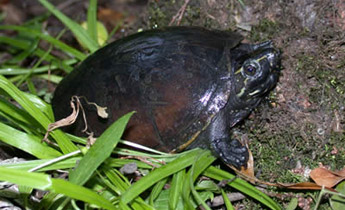
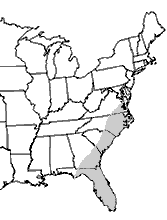
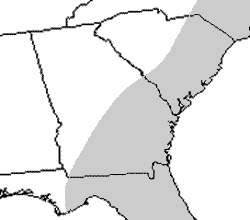
Throughout much of its range in Florida, the striped mud turtle is characterized by yellow head stripes and three light longitudinal stripes on a dark brown carapace. But individuals most parts of the Carolinas and Georgia lack these stripes, retaining only the light stripe between the eye and nostril. This turtle is only 3 to 4 inches in length and has a double-hinged plastron, similar to the eastern box turtle. The sexes can be distinguished by the longer, thicker tails of males. The striped mud turtle is different from most other turtles species in the Southeast in that females nest in the fall, rather than the spring or summer. Striped mud turtles inhabit calm freshwater habitats, such as swamps and canals with soft substrates and are most common in cypress swamps and blackwater creeks.