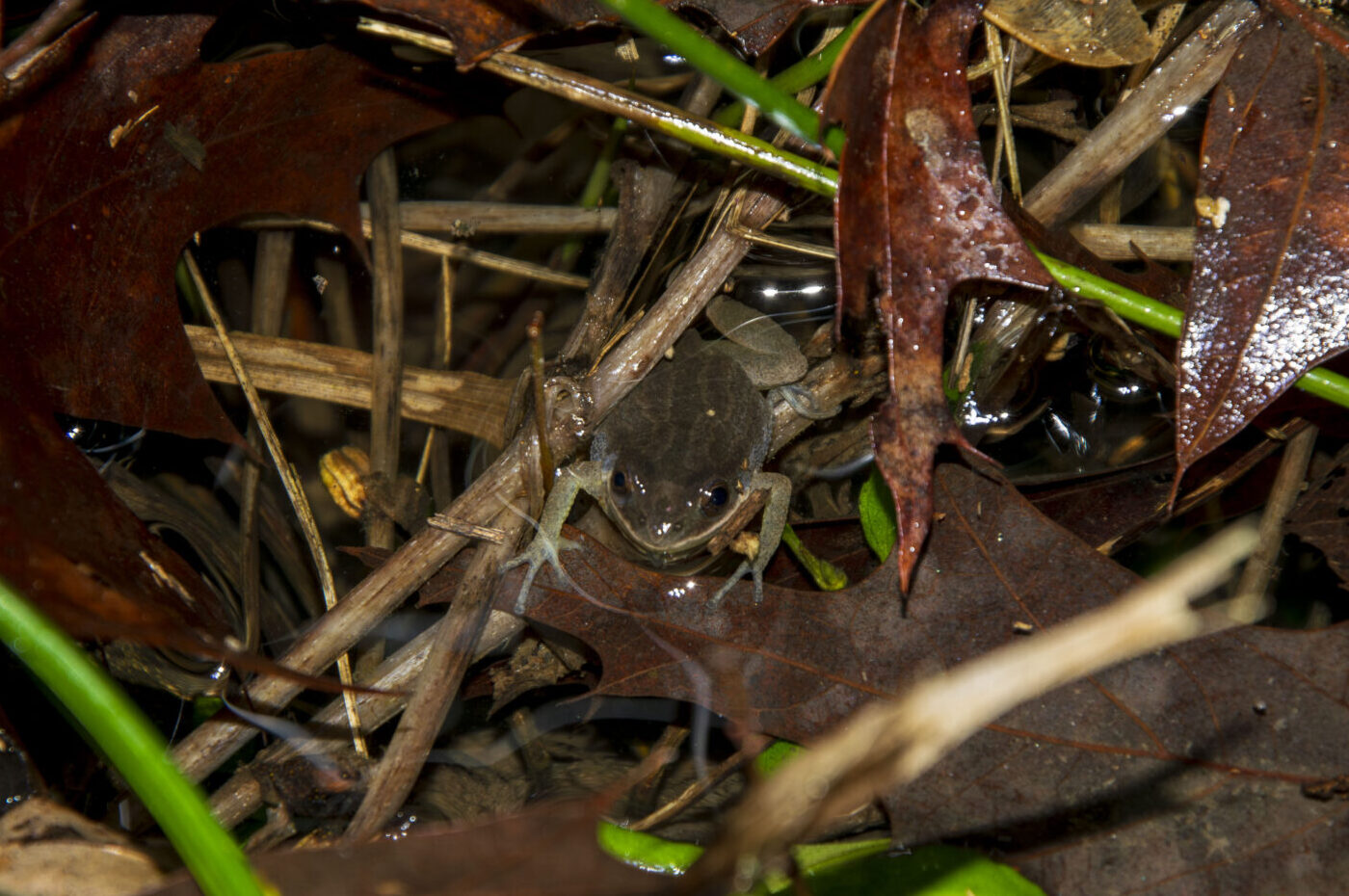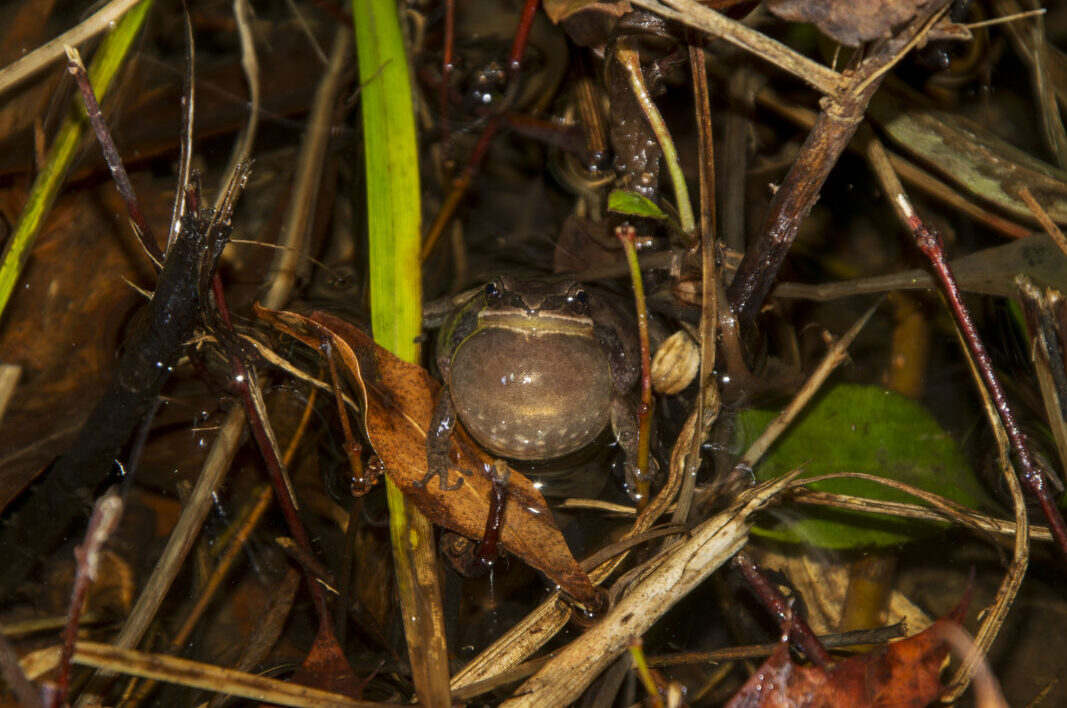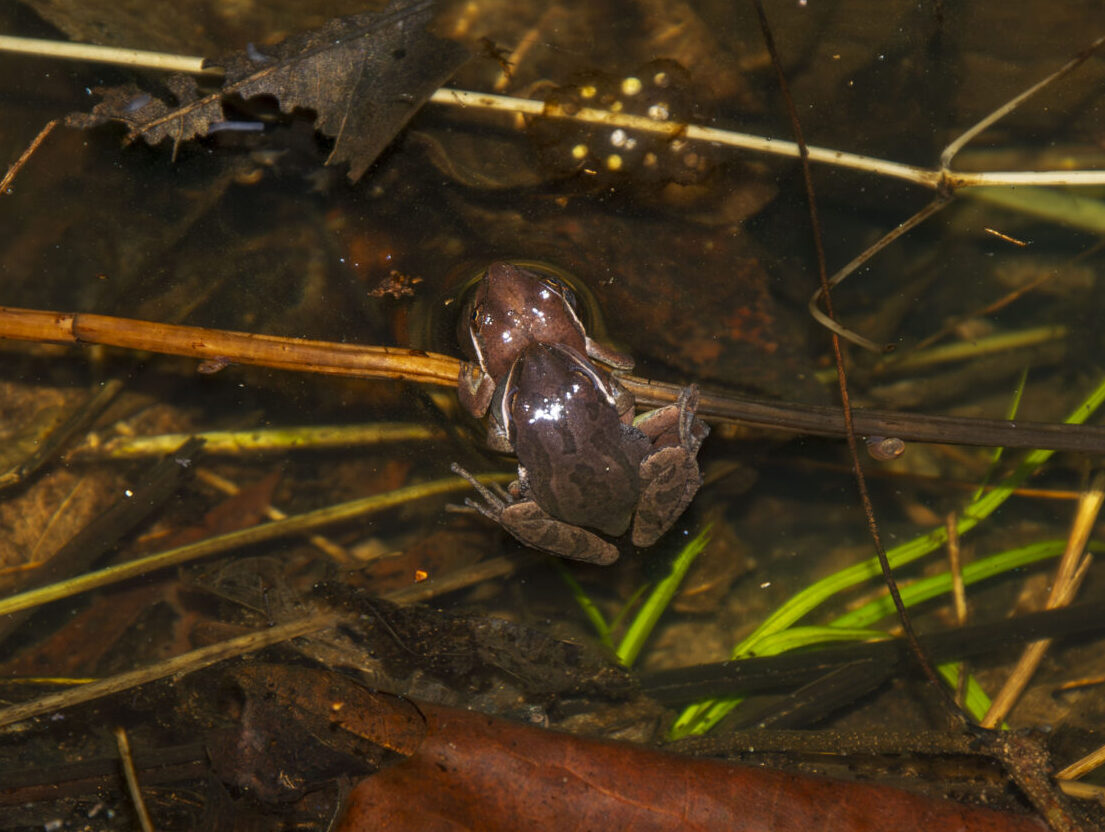
Southern Chorus Frog (Pseudacris nigrita)
Southern Chorus Frog (Pseudacris nigrita)
Southern Chorus Frog Call
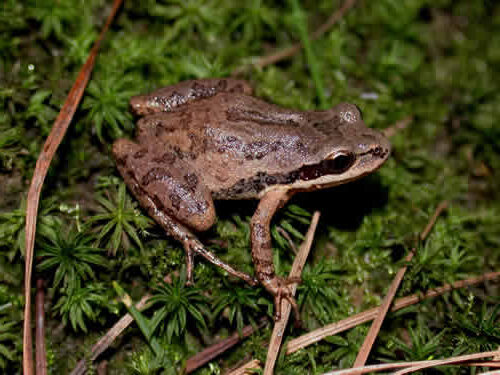
Description: A very small frog, averaging ~2.5 cm (1 in) in length. Dorsal coloration ranges from tan to gray, often with numerous black markings that may appear as rows of spots or faint stripes. Individuals may vary in color depending on the environment and the time of day. Typically, the darkest of the southeastern chorus frogs. A pale, sometimes nearly white, line runs along the upper lip.
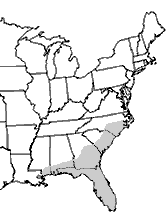
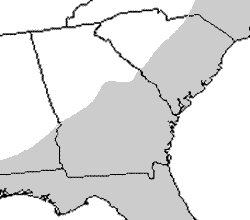
Range and Habitat: Distributed across the southeastern United States, from Florida northward through the Coastal Plain of Georgia, South Carolina, and into parts of North Carolina, Alabama, and Mississippi. In the Southeast, most often found in pine forests, grassy wetlands, Carolina Bays, and man-made habitats such as roadside ditches. Occupies the Coastal Plain, whereas the similar Upland Chorus Frog (P. feriarum) is primarily found in the Piedmont and Mountains.
Habits: Cold-tolerant and active during months when many frogs are inactive. In South Carolina and Georgia, activity peaks from December through April. Breeding occurs in shallow wetlands, roadside ditches, and grassy pools. Females lay up to ~150 eggs in small clusters of 10–20, attached to vegetation. Eggs hatch within 3 days, and tadpoles may reach 3.8 cm (1.5 in) before metamorphosis, which takes 1.5–4 months. Outside of breeding, individuals are secretive, spending time in burrows or under logs.
Call: A loud, rapid trill of 6–12 notes per series, repeated in intervals separated by short pauses.
Conservation Status: Common throughout its range and not protected in the Southeast.