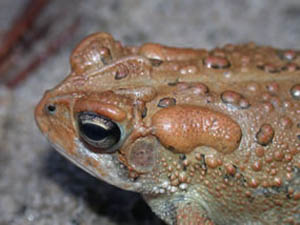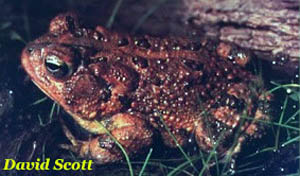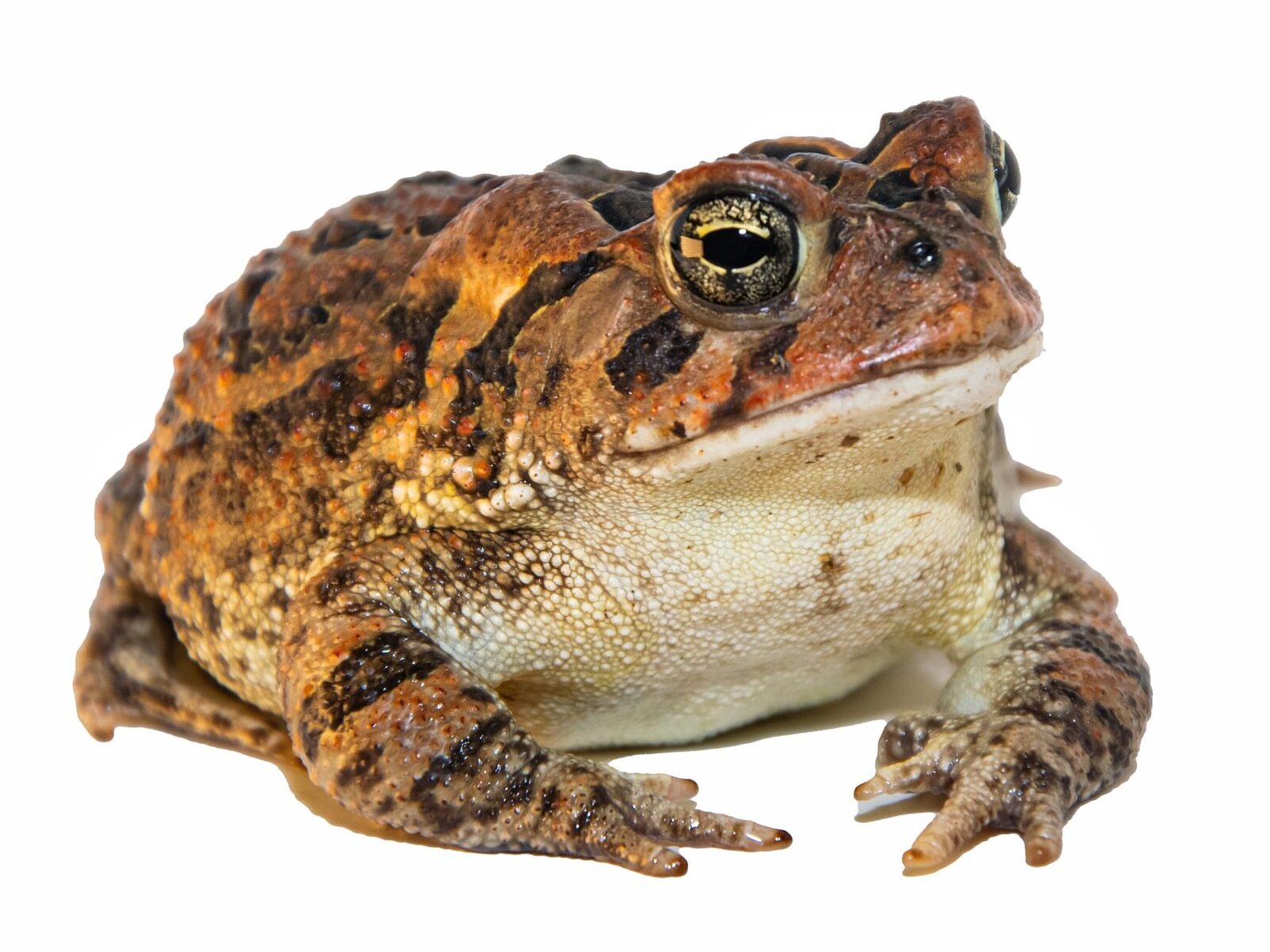
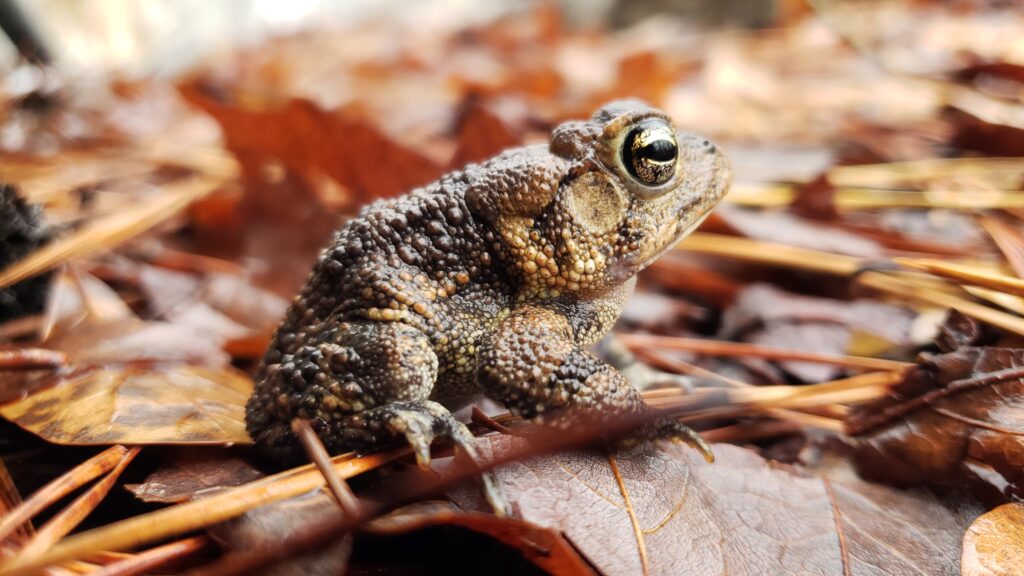
Southern Toad (Bufo [Anaxyrus] terrestris)
Southern Toad (Anaxyrus terrestris)
Southern Toad Call
Description: A medium-sized toad averaging 41–75 mm (1.6–2.9 in) in length, though insular populations may reach 113 mm (4.4 in). Males are smaller than females and develop a dark throat during the breeding season. Dorsal coloration is usually brown but varies from gray to blackish or brick red, often with dark blotches containing one or more warts. A faint mid-dorsal stripe may be present. The venter is pale grayish white with a spotted chest. Parotoid glands are large and elongated, positioned behind the eyes. Distinctive high cranial crests terminate in prominent knobs projecting upward in front of the parotoids, giving the species a “horned” appearance.
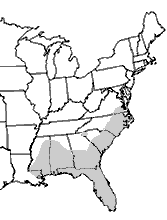
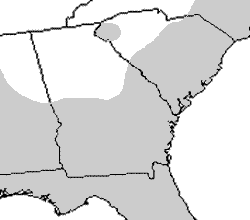
Range and Habitat: Occurs throughout the Southeast below the Fall Line, from southeastern Virginia south through Florida and west to eastern Louisiana, with an isolated population in northwestern South Carolina. Occupies a wide range of terrestrial habitats associated with sandy soils, including pine woodlands, coastal scrub, hammocks, agricultural fields, and residential areas. Requires shallow standing water for breeding.
Habits: Primarily nocturnal, seeking cover by day under logs, leaf litter, or in burrows. Breeding occurs from February to October, depending on latitude, but peaks in spring with warm, rainy weather. Congregates in shallow wetlands, ponds, ditches, and even temporary pools such as tire ruts. Females lay 2,500–4,000 eggs in long gelatinous strands that hatch in 2–4 days. Metamorphosis occurs within 30–55 days. Sexual maturity is reached at 2–3 years, with a lifespan of at least 10 years. Adults consume a wide variety of invertebrates, while tadpoles feed on algae, vegetation, and detritus. Predators include snakes (particularly hognose and water snakes), turtles, giant water bugs, and wading birds. Defense includes cryptic behavior, body inflation, and parotoid glands’ toxic secretions. Eggs and tadpoles are distasteful to many predators.
Call: A shrill, high-pitched trill lasting 2–8 seconds at ~75 notes per second. Higher in pitch than the call of the American Toad.
Conservation Status: It is widespread and common. It is not legally protected within its range and is adaptable to suburban and agricultural landscapes. Declines have been noted in areas of Florida where invasive Cane Toads (Rhinella marina) compete with or prey upon them.