
Canebrake / Timber Rattlesnake (Crotalus horridus) – Venomous
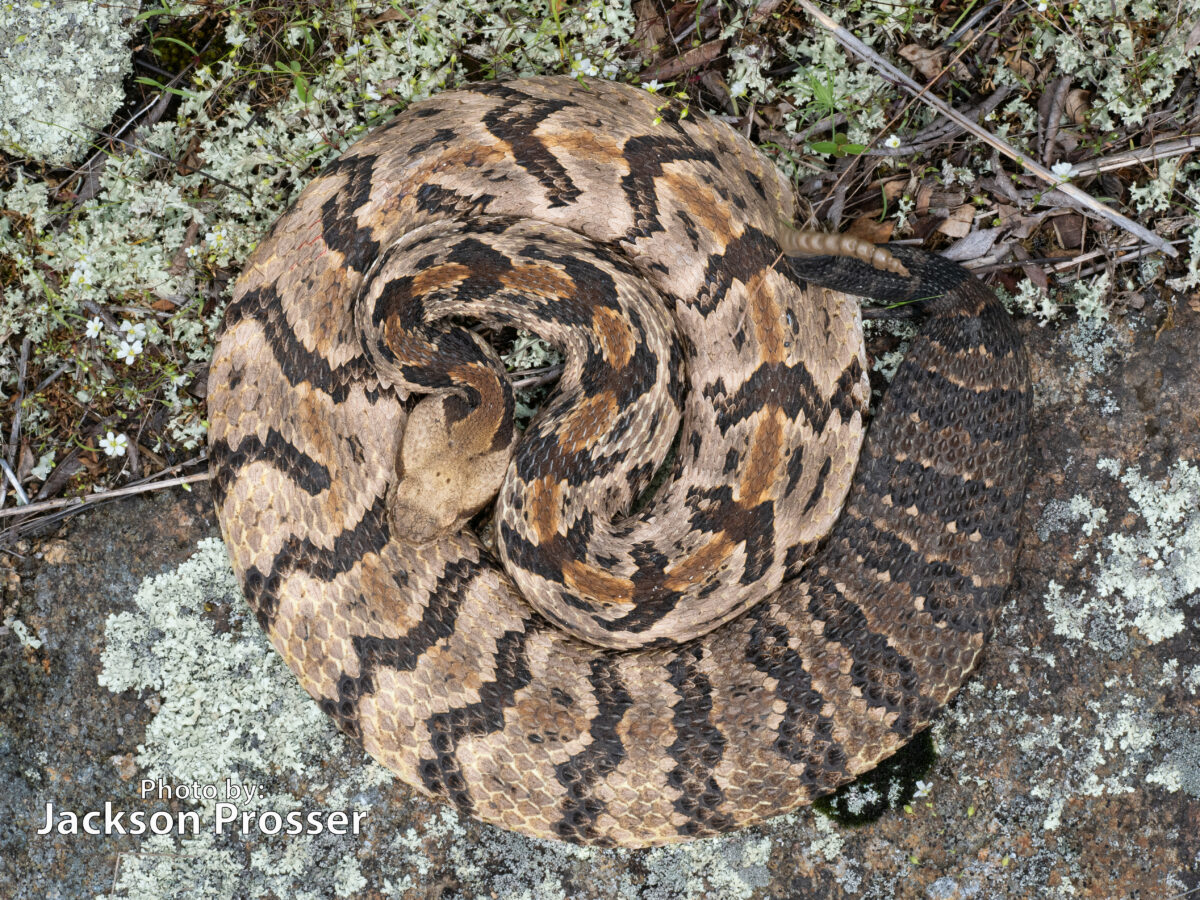
Canebrake / Timber Rattlesnake (Crotalus horridus)
Venomous
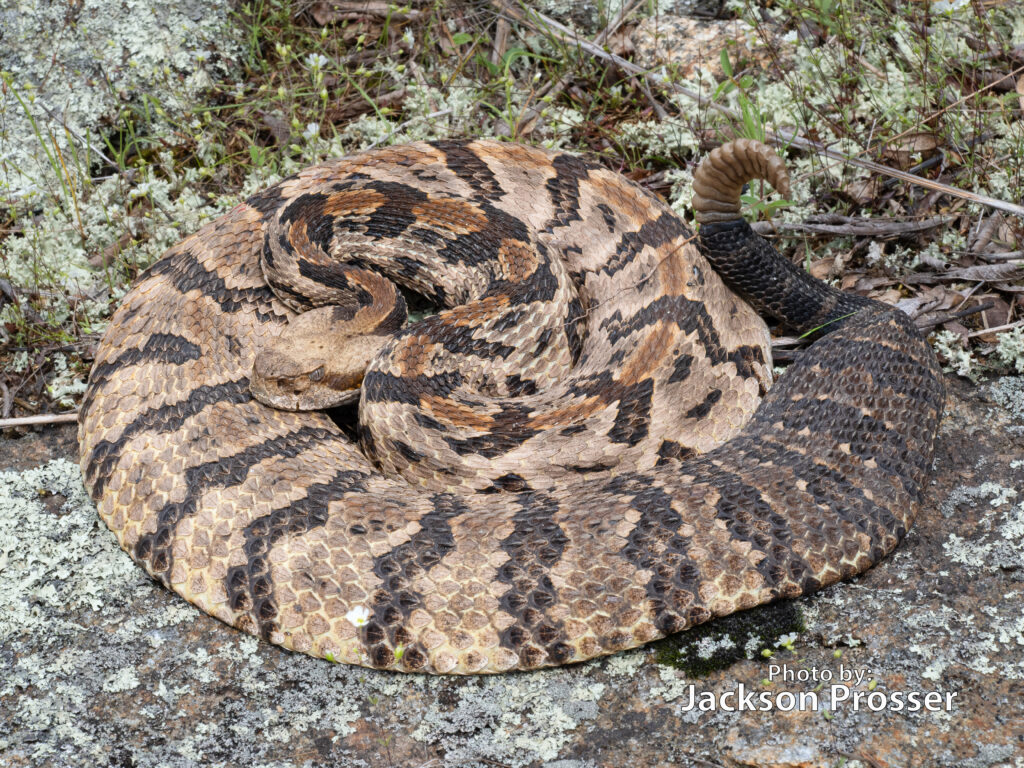
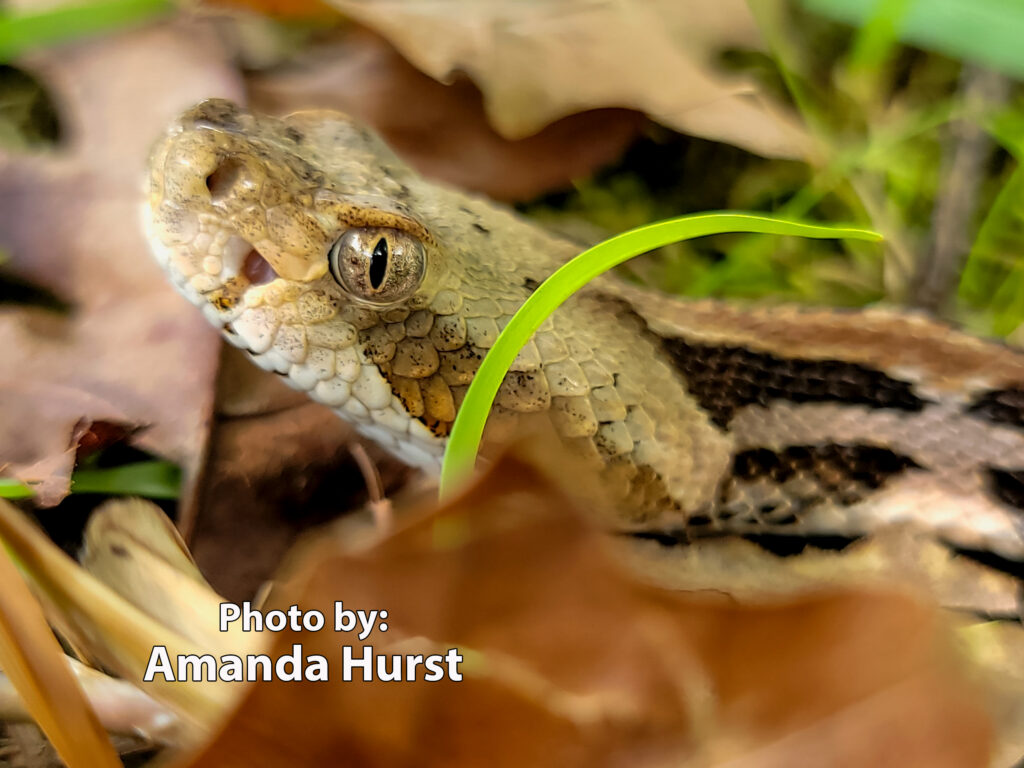
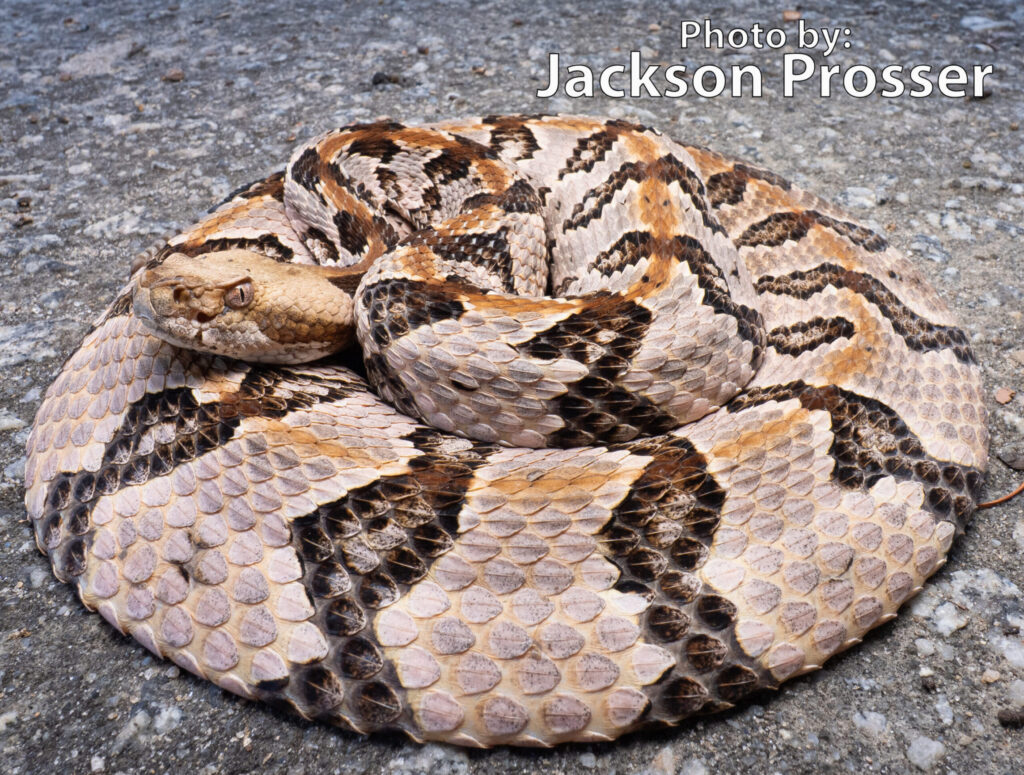
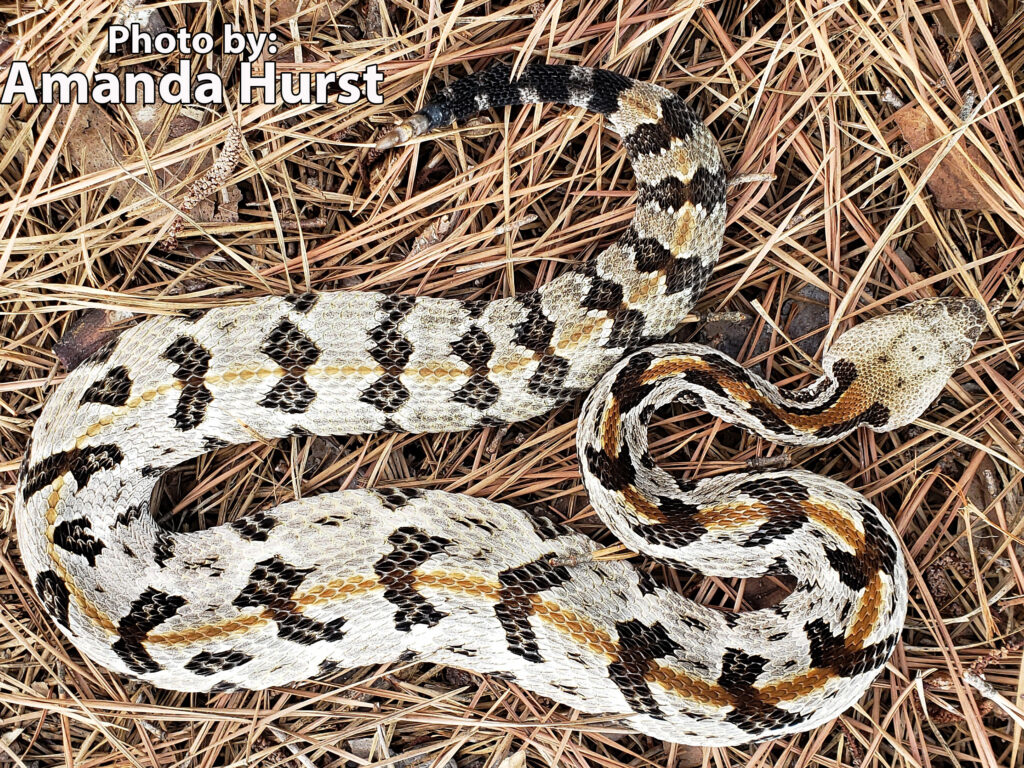
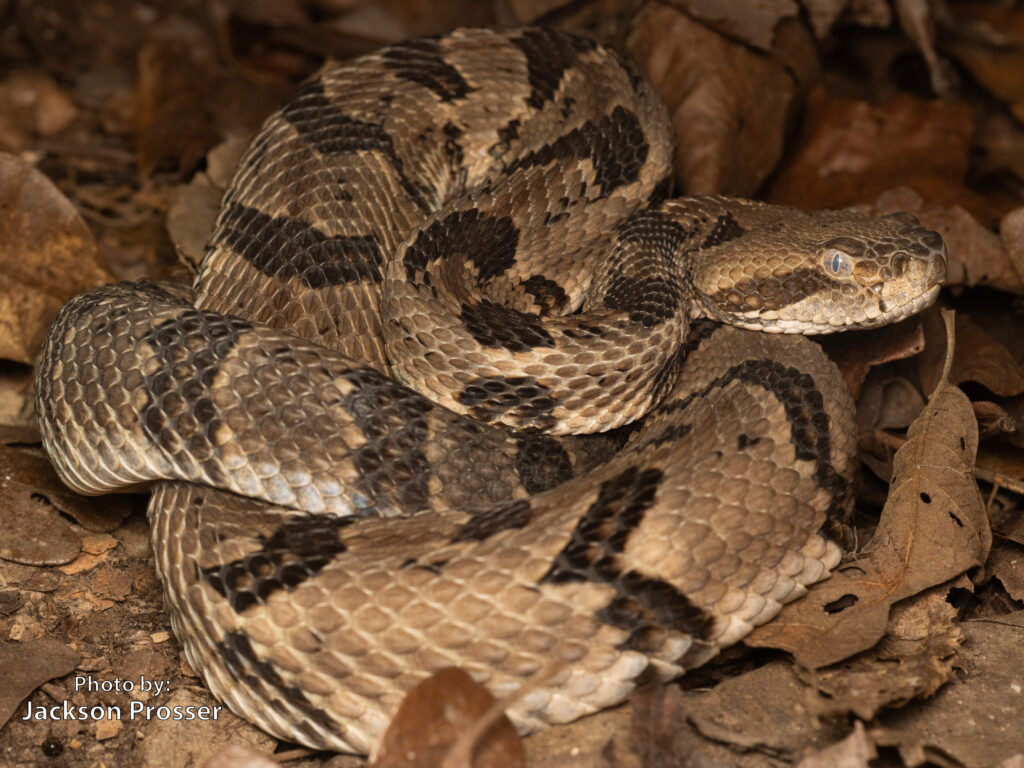

Description: The Timber Rattlesnake is a large, heavy-bodied pit viper that typically reaches 3–5 ft (0.9–1.5 m) in length. However, some individuals grow over 6 ft (1.8 m). It has a broad head, a thick body, and a distinctive rattle at the tip of its tail, composed of keratin (the same durable material found in human hair and nails). Its back scales are strongly keeled, giving it a rough texture, and it has a single anal plate.
Coloration is highly variable across its range. Body color may be yellow, gray, or light brown, with black or dark brown chevron-shaped crossbands. Many individuals exhibit a brown or orange stripe running down the back along the spine. Northern and montane populations often include melanistic “black phase” individuals, in which patterning is obscured by heavy dark pigmentation. Juveniles resemble adults but are often paler and have more distinct markings. Timber rattlesnakes are often referred to as “Canebrakes”, a name that originated with early naturalists who observed the frequent association with canebrake thickets, which are dense stands of native bamboo that once grew extensively along rivers and streams in the Southeast.
Range and Habitat: The Timber Rattlesnake is widely distributed in the eastern United States, from New England south to Florida, and westward into Texas, Kansas, and Minnesota.
Habitats include deciduous and mixed hardwood forests, pine ridges, rocky outcrops, bluffs, and swamps. In the Southeast, they are strongly associated with upland hardwood and pine ecosystems adjacent to bottomlands. Seasonal studies show that snakes shift habitats. In spring, they bask near overwintering dens; in summer, they forage in forests and edge habitats; and in fall, they return to communal hibernacula in rocky crevices or stump holes.
Habits: Timber rattlesnakes are primarily ambush predators that remain motionless along rodent trails or in ecotones until prey comes within striking distance. They are active during the day in spring and fall but shift to crepuscular or nocturnal activity during hot summer months. Seasonal surface activity is tightly linked to temperature and prey abundance.
They show strong site fidelity to denning areas, often using the same hibernaculum for many years. Seasonal movement studies show relatively large home ranges compared to other pit vipers, with males ranging widely during the breeding season.
Timber Rattlesnakes feed primarily on small mammals, particularly squirrels, chipmunks, mice, and rabbits. Birds are occasionally taken, especially ground-nesting species, and frogs or other reptiles are infrequent prey. They employ a strike-and-release strategy: they inject venom, release the prey, and then trail it using chemosensory cues until death. This strategy minimizes the risk of injury from struggling prey and exploits the venom’s immobilizing and digestive effects. Observations of Timber rattlesnakes sitting in ambush around bird or squirrel feeders have also been reported, suggesting pattern recognition and strategic hunting. Timber Rattlesnakes are mid-level ambush predators that play a vital role in controlling rodents, rabbits, and bird populations. They themselves fall prey to raptors, coyotes, bobcats, wild turkeys, and kingsnakes.
Timber rattlesnakes are ovoviviparous. Mating occurs in late summer or early fall (August-September), and they give birth the following year. Gestation lasts about four months, and females give birth to 5-20 live young. Neonates measure 10-13 in (25-33 cm) and typically have a single “button” rattle. Female timber rattlesnakes also exhibit a form of maternal care, remaining with their young at birth sites for several weeks, which is believed to protect them during their most vulnerable stage. This short-term care reduces predation risk and ensures a suitable microhabitat. Communal birthing has also been documented, in which females congregate at suitable sites year after year and “perform” this maternal care. However, females do not have young frequently. Females do not reproduce until they are 9-10 years old, then reproduce infrequently, often only once every 2-4 years due to the high energetic cost of reproduction. This low reproductive frequency contributes to the species’ vulnerability to population declines.
Venom and Bites: Timber rattlesnakes have a unique venom dichotomy:
- Southeast/Coastal Plain (Type A): They have a neurotoxic venom (attacks the nervous system) similar to that of a Mojave rattlesnake. Venom can cause paralysis, respiratory distress, and systemic neurotoxic effects.
- Northeast/Midwest/Appalachians (Type B): they have a hemotoxic venom (attacks blood cells) that causes hemorrhage, disrupts clotting, and leads to tissue necrosis and swelling.
Where these populations converge, venom-type overlap can result from gene flow between them. In humans, bites can cause severe local and systemic effects. While fatalities are now rare with rapid access to antivenin, untreated bites can be life-threatening. Envenomation should always be treated as a medical emergency.
First Aid Protocol: If bitten by a timber rattlesnake, first move away from the snake and do not attempt to catch or kill it. Call emergency services immediately and remain calm and still, as physical activity can accelerate venom spread. If the bite is on a limb, immobilize it and keep it at or slightly below heart level. Remove rings, watches, or tight clothing before swelling begins, and never apply a tourniquet or attempt to cut the wound.
Conservation Status: Timber rattlesnakes are listed as threatened, endangered, or extirpated in many northern states, but remain more common in the Southeast and Midwest. However, their life-history traits, such as delayed maturity, low reproductive frequency, and reliance on communal dens, make populations vulnerable to road mortality, habitat fragmentation and destruction, and human persecution. Improving public perception of rattlesnakes is essential to their conservation, as fear often leads to unnecessary killing. Overall, the species is considered vulnerable across its range despite local abundance. While not protected in Georgia, they are protected in South Carolina.