
Worm Snake (Carphophis amoenus)

Worm Snake (Carphophis amoenus)
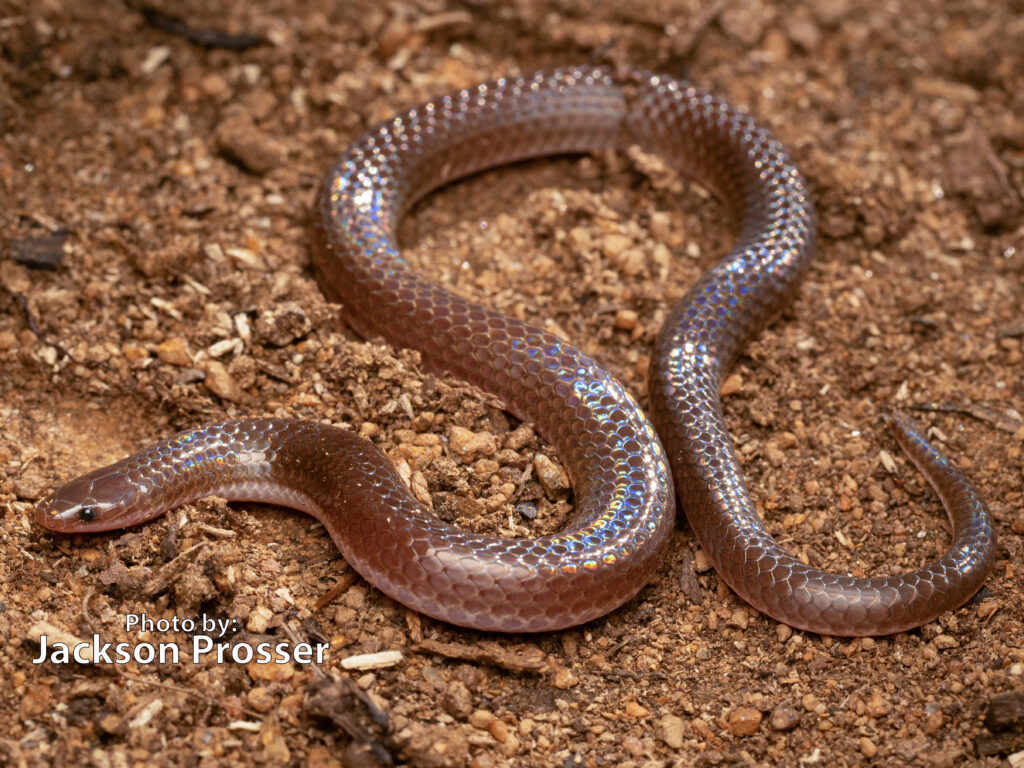
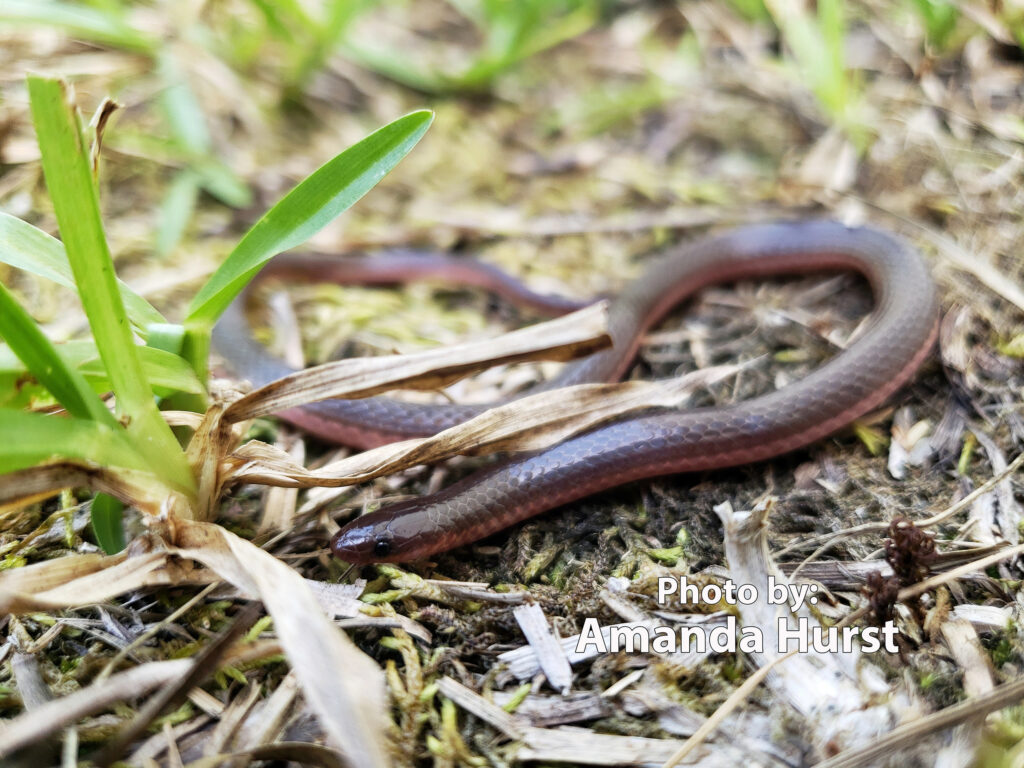
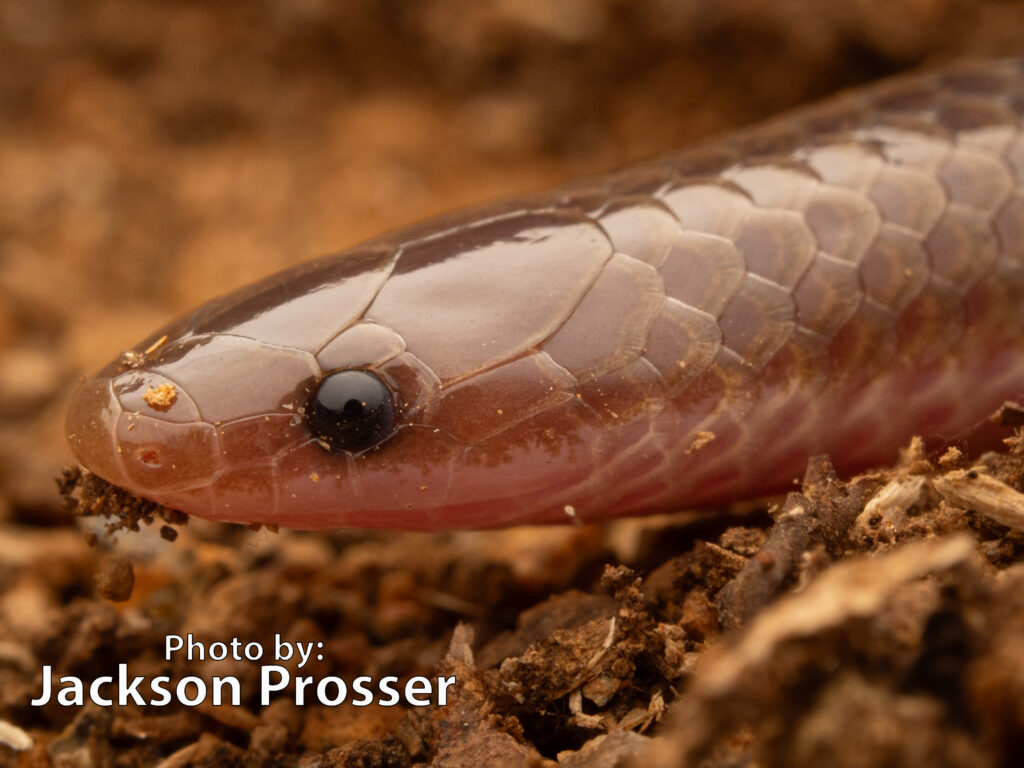


Description: The Eastern Wormsnake is a small, glossy, highly fossorial snake, usually 7-11 in (18-28 cm) long, with maximum lengths approaching 15 in (38 cm). Body coloration is uniform, dark brown to chestnut, contrasting with a pink to white belly that extends partially up the sides of the body. The head is small, narrow, and only slightly distinct from the neck, with small eyes and smooth, shiny scales that aid burrowing. The tail ends in a sharp, spine-like tip, which is used defensively to press against predators or believed to brace against the soil during feeding. Juveniles resemble adults, though they are occasionally slightly darker. Females are, on average, longer and heavier-bodied, while males have proportionally longer tails.
Range and Habitat: The Eastern Wormsnake is distributed widely across the eastern United States, from southern Massachusetts south to Georgia, and west to the Mississippi River. In Georgia and South Carolina, they are common in the Piedmont, Appalachians, and much of the Coastal Plain.
Wormsnakes are associated with deciduous and mixed hardwood forests with moist soils. Microhabitat studies show that they preferentially occupy areas with abundant coarse woody debris, decaying logs, and deep leaf litter, which provide thermal stability and moisture essential for survival. Individuals are frequently found within decaying wood, where humidity is higher, and temperatures are cooler than in the surrounding substrate.
Habits: Eastern Wormsnakes are secretive and spend the majority of their lives underground. Though seldom seen, wormsnakes are among the most abundant small snakes in eastern deciduous forests. They are most often encountered beneath leaf litter, rotting logs, flat rocks, or artificial cover. Surface activity peaks in spring and early summer, often following rains when soils become saturated. Movements are minimal, with individuals occupying small home ranges, often smaller than 500 square meters.
Wormsnakes are specialist predators of earthworms, using their narrow heads and pointed snouts to pull worms from soil and detritus. Slugs and other soft-bodied invertebrates are occasionally consumed, but studies show earthworms make up a majority of their diet. Because of their high population densities, they are a major predator of soil invertebrates and an important prey item for other snakes, birds, and small mammals.
Breeding occurs in spring. Females lay clutches of 2-8 eggs in rotting wood, under rocks, or in loose soil in early summer. Incubation lasts about 6-8 weeks, with hatchlings emerging in late summer or fall at 3-4 in (7-10 cm) in length. Females likely reproduce annually, though clutch size is strongly influenced by body size and resource availability.
When threatened, wormsnakes do not bite but may release musk and press their pointed tail tip into the handler’s skin. They are not aggressive and are not commonly encountered.
Conservation Status: The Eastern Wormsnake is listed as Least Concern due to its wide distribution and local abundance. However, its dependence on moist forest soils and coarse woody debris makes it vulnerable to habitat degradation, soil desiccation, feral cats, and urbanization. They are protected in the states of Georgia and South Carolina.