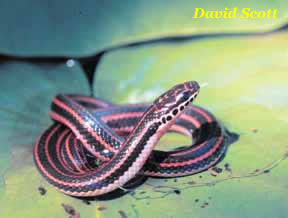
Rainbow Snake (Farancia erytrogramma)
Rainbow Snake (Farancia erytrogramma)


Description: A large, highly aquatic, non-venomous snake reaching up to 168 cm (66 in). Glossy black dorsum marked with three distinct red stripes; venter red or pink with two to three rows of black spots. Yellowish coloration is often present on the head and along the sides. Scales are smooth and shiny, with small dark eyes and a pointed tail tip. Males are smaller than females but have proportionally longer and thicker tails. Juveniles resemble adults but usually lack yellow markings.
Range and Habitat: Occurs in the Coastal Plain from southern Virginia to eastern Louisiana, absent from the Piedmont and Mountains. Formerly found near Lake Okeechobee, Florida, but presumed extirpated from southern Florida. Prefers flowing-water habitats such as blackwater creeks, streams, and rivers, as well as cypress swamps. In coastal areas it may occur in tidal or even brackish waters. Juveniles may inhabit seasonal wetlands before shifting to permanent water bodies as adults. Occasionally it moves overland and can be found far from water.
Habits: Secretive and aquatic, spending much of its life concealed in vegetation or debris. Rarely bask in the open, making sightings uncommon. Most often encountered crossing roads near wetlands on rainy summer nights. Non-aggressive when captured and do not bite. Diet is specialized, consisting largely of eels, which has led to the nickname “eel moccasin.” Breeding biology is not well studied; females may lay up to 50 eggs, though clutches of ~20 are more typical. Hatchlings emerge in late summer, sometimes overwintering in the nest before dispersing.
Conservation Status: Although rarely seen, rainbow snakes are fairly common where habitat persists and are not protected in most of their range. Legally protected in Georgia. Reliance on aquatic habitats and eel populations makes them vulnerable to wetland loss, river damming, and prey decline.