
Tiger Salamander (Ambystoma tigrinum)


Photos by Amanda Hurst unless otherwise noted
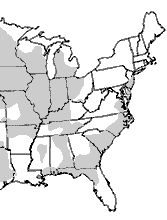
| In other parts of its extensive range, the tiger salamander may be the most frequently encountered salamander. In the Southeast, however, it is less common. Tiger salamanders are usually found as eggs or larvae instead of adults, in temporary and permanent ponds that are open and grassy. Unlike in other parts of its range, tiger salamanders in the Southeast appear to be incapable of paedomorphosis, and the famous “cannibal morph” has not been collected in the eastern United States. The larvae have astounding growth rates and can achieve metamorphic size (up to 5 or 6 inches) in just a couple of months. These are the largest terrestrial salamanders on in the southeast and may approach 8 inches in total length. Adults are usually black with yellow markings that may come in the form of spots, blotches, bands or even short stripes. |