Description: A fairly large: 7 – 17 cm (4.75-6.75 in), black salamander with numerous white/silver flecks and a slightly lighter venter and 16 costal grooves. This species is best distinguished from other Slimy Salamanders (Plethodon glutinosis complex) by range. Females are slightly larger than males. Like other Slimy salamanders, P. teyahlee produces slimy, glue-like secretions when it feels threatened.
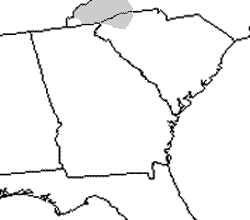
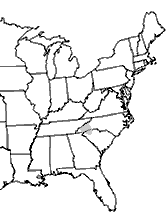
Range and Habitat:Plethodon teyahalee is found in mountainous regions of North Carolina, South Carolina, and Tennessee. They are found in almost any moist forested habitat.
Habits: By day, they are found under rocks, moist decaying logs and in crevices along stream beds, but they become active at night, searching leaf litter for small insects. Male Plethodon teyahalee perform an elaborate courtship dance and females guard their clutch if eggs fiercely and may abandon their eggs if they appear to have been tampered with. Young salamander hatch directly from eggs and have no aquatic larval stage.
Conservation Status: The Plethodon glutinosis complex (of which Plethodon teyahalee is a member) is common. However, the conservation status of Plethodon teyahalee specifically is uncertain.
Account Author: Alicia Hudson, University of Georgia – edited by J.D. Willson