
Mud Salamander (Pseudotriton montanus)


Photos by J.D. Willson unless otherwise noted
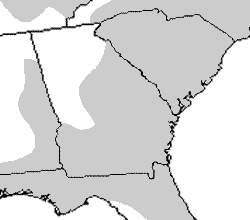
| Pseudotriton montanus, the mud salamander, is a large, robust plethodontid encountered infrequently in South Carolina and Georgia. Adults range from nearly red in younger individuals to brown in older and larger specimens. They have small black spots that are well separated along the sides and dorsum, and maybe even on the venter. Adults have brown eyes, as opposed to the gold eyes of P. ruber. Eggs are laid and larvae dwell in small muddy springs and seeps along slow flowing creeks. Metamorphosis occurs at a fairly large size (but less than 2 inches, snout to vent) at some point in the second year after hatching. |