Eastern Fence Lizard (Sceloporus undulatus)
Photos by Amanda Hurst unless otherwise noted
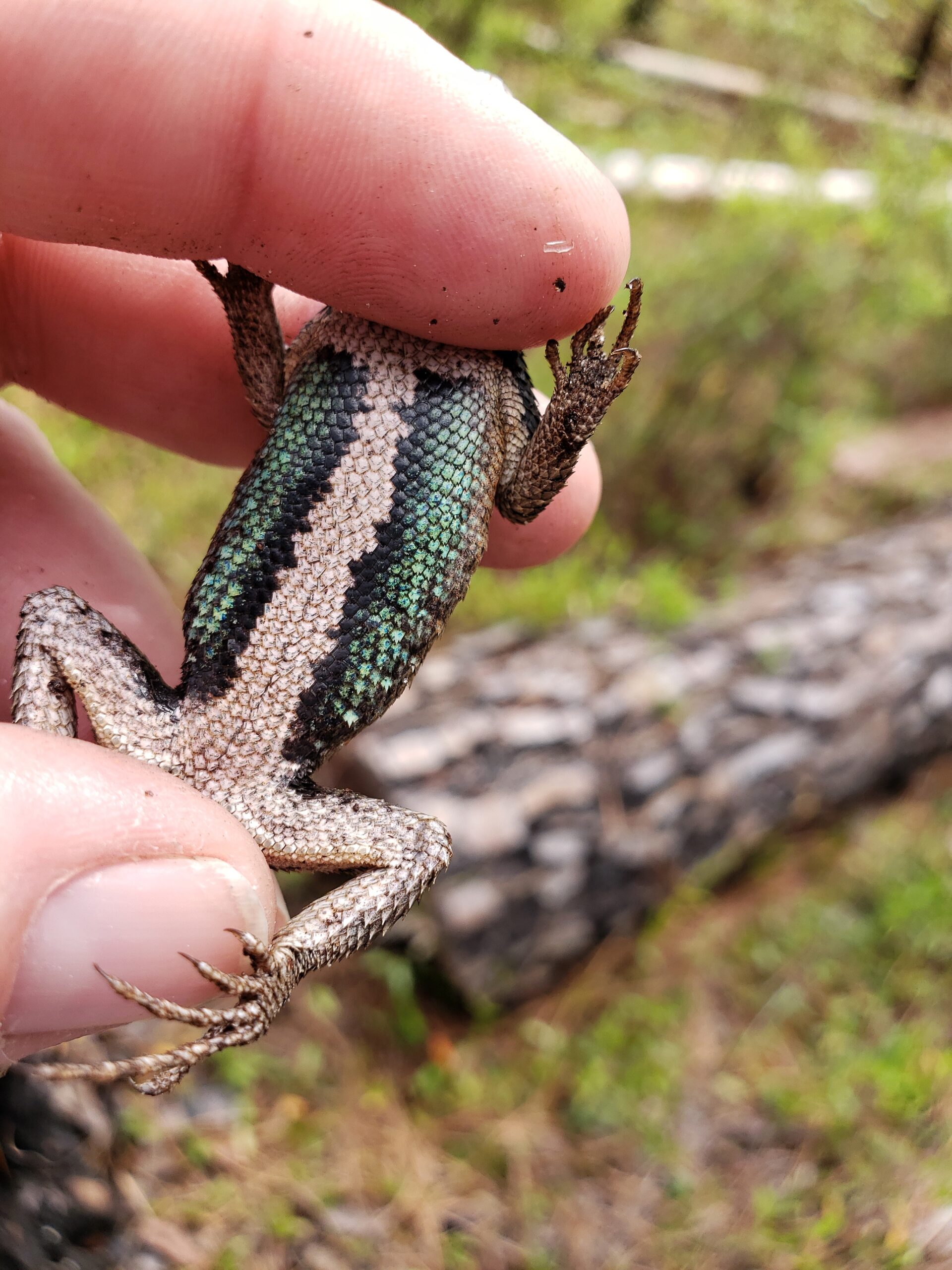
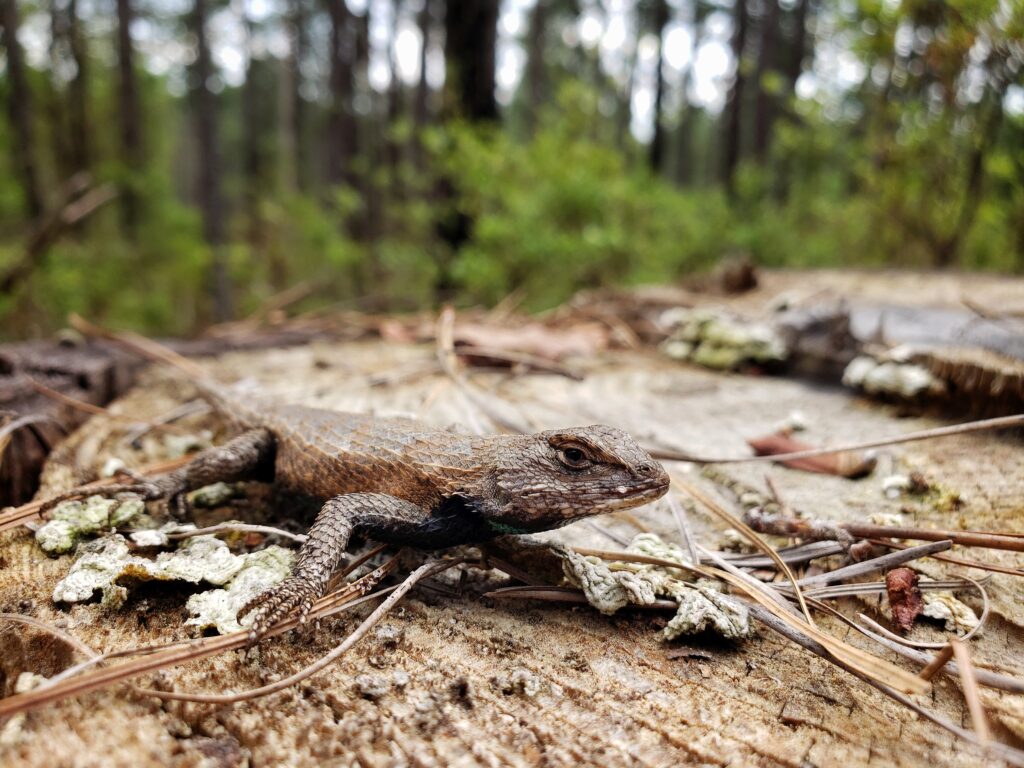
Description: 4 – 7.25 in (10 – 18.5 cm). As a member of the spiny lizard family, the Fence lizard is the only lizard native to Georgia and South Carolina that has rough scales. Fence lizards are most commonly grayish in color, but may range from nearly black to brown. Females often have black horizontal patterning on their back, while during the breeding season, males have bright blue patches on their chin and underside.
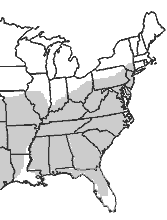
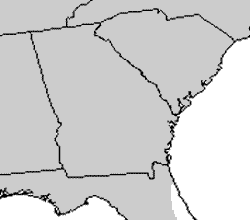
Range and Habitat: Fence lizards range across the Southeast and are common in many habitats from the mountains to the coast. Unlike other lizards, though, fence lizards are not particularly common on barrier islands. While seldom found far from trees, fence lizards are most common in dry, open forests, particularly if there are abundant logs and stumps where they may hide.
Habits: Although sometimes found on the ground, fence lizards are one of our most arboreal (tree-dwelling) lizards and usually dash for the nearest tree when approached. When pursued, the fence lizard will stay on the opposite side of the tree from the predator, in the same fashion as a squirrel.
Prey: Fence lizards eat a wide variety of insects, spiders, and other invertebrates.
Reproduction: Female fence lizards generally lay 3 -16 eggs in the late spring. The eggs hatch in late summer and hatchlings look like miniature adults.
Abundance: Fence lizards are common lizards throughout the southeast, particularly in open forests and field edges.