Spring Peeper (Pseudacris crucifer)
Spring Peeper (Pseudacris crucifer)
Spring Peeper Call
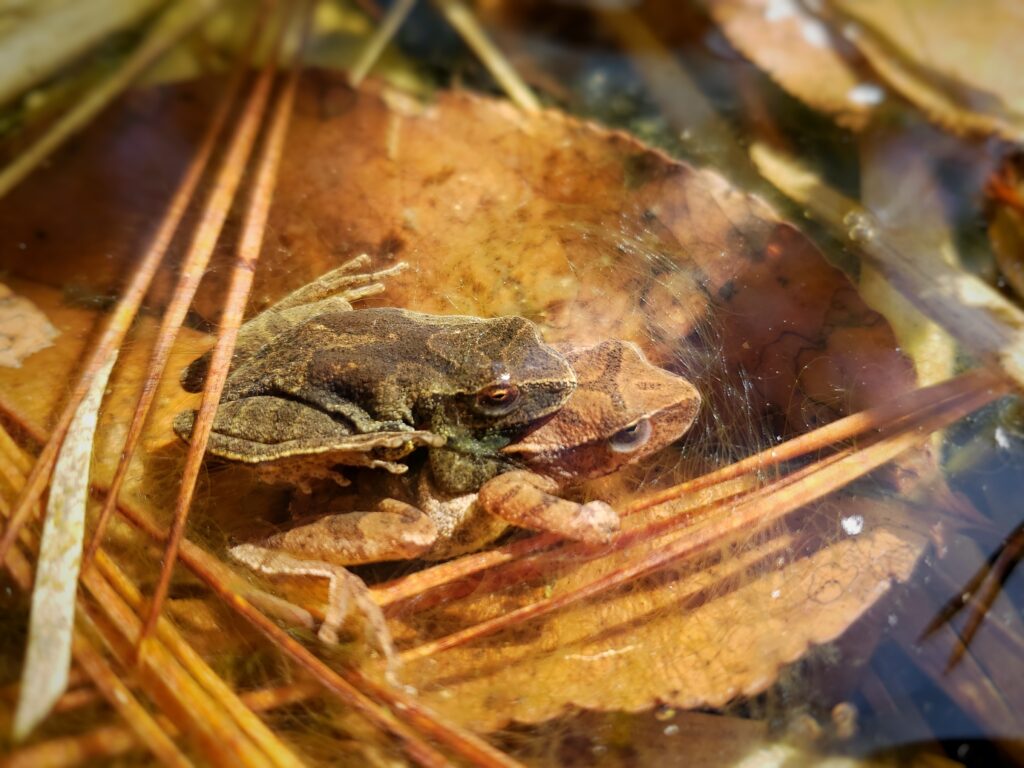
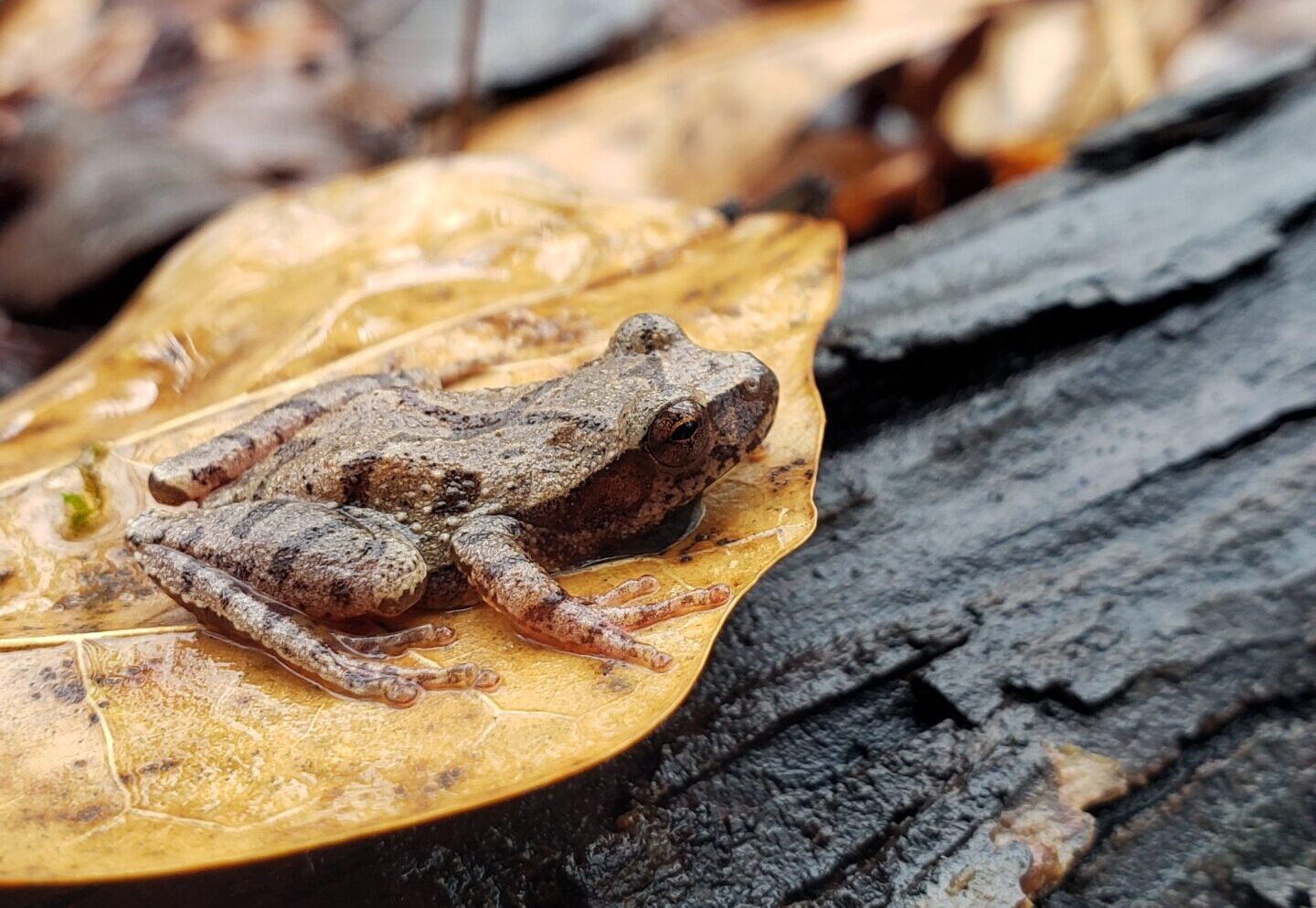
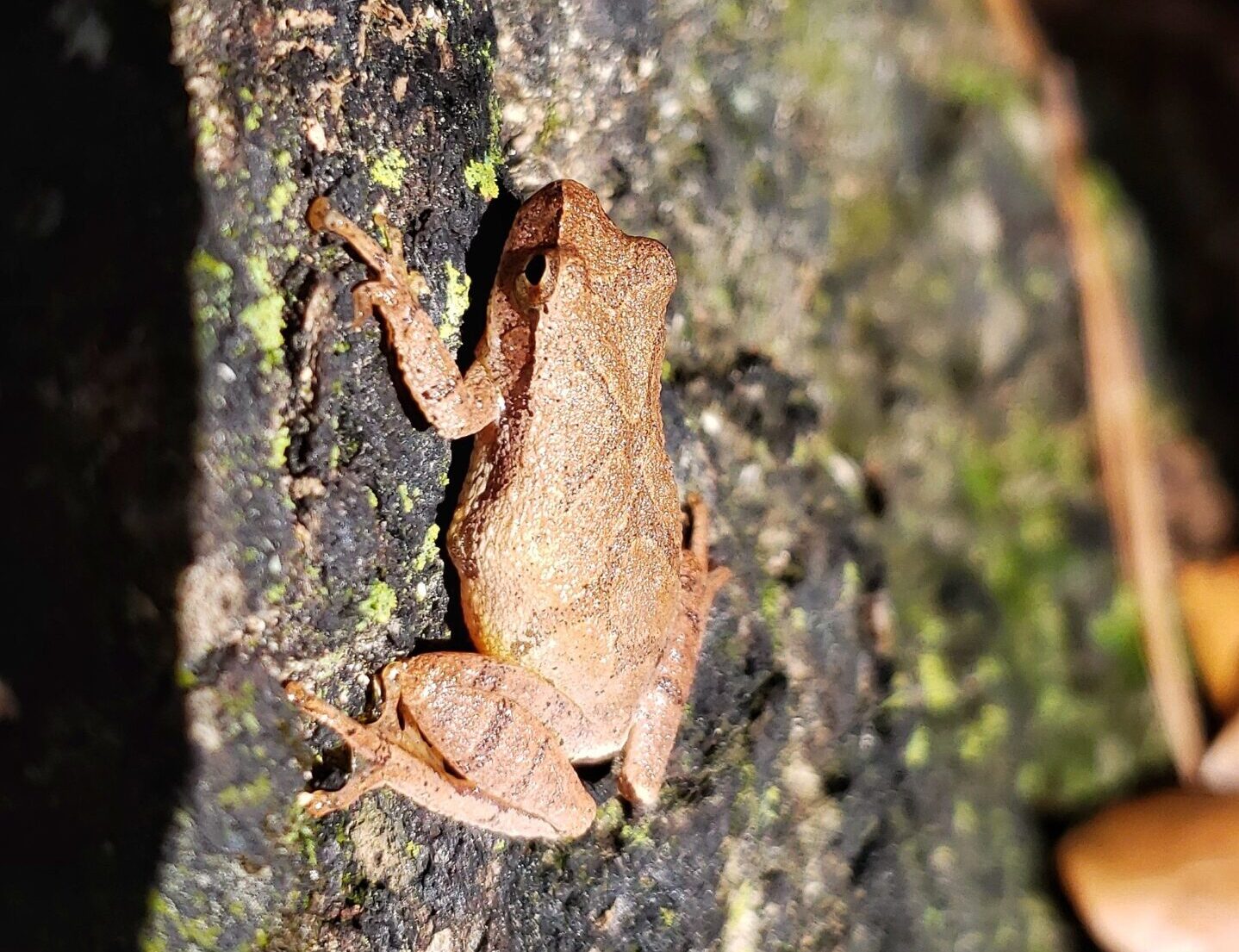
Description: The spring peeper is a small, delicate frog reaching no more than 1 inch as an adult. Overall, it is mostly smooth, with slender legs. It is noted for the X mark on its back and small pads on its toes. But more often than not, the X is an imperfect one. The dorsal coloration can vary from gray to brown. Spring peepers often call where small trees or shrubs are surrounded by standing water. Though these frogs are rarely seen other than during their breeding season (winter and early spring in South Carolina and Georgia), they are sometimes active in wooded areas just after a heavy rain.
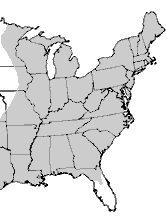
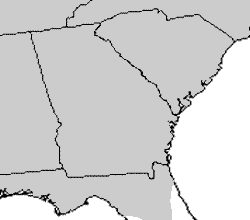
Range and Habitat: Spring peepers are found throughout the Southeast, from Canada down through the Gulf and down through the top third of Florida. They are found in forested habitats throughout their range and breed in permanent and seasonal wetlands. They are abundant in shallow, fish-free areas. Spring peepers breed in marshes, Carolina bays, agricultural ponds, and ditches. They tolerate mild levels of urbanization and breed in slow-moving streams in neighborhoods.
Habits: Spring peepers are active year-round but are usually encountered in the winter or early spring. They are arboreal but are found lower in trees than other treefrog species. During deep winter, they retreat to underground burrows or under bark. This species is unique in that much of its body can withstand freezing.
Description: A small, delicate frog rarely exceeding 2.5 cm (1 in) in length. It has smooth skin, slender limbs, and small toe pads. The dorsum is typically gray to brown, marked with a faint or imperfect “X” pattern on the back.
Range and Habitat: Widespread across eastern North America, from Canada south to the Gulf Coast and northern Florida. Common in forested habitats, especially near shallow, fish-free wetlands. Breeds in marshes, Carolina Bays, seasonal ponds, ditches, and even slow-moving neighborhood streams. Tolerant of mild urbanization.
Habits: Active year-round, though most often encountered during the late winter and early spring breeding season. Arboreal but tends to remain lower in trees and shrubs compared to other treefrogs. In cold weather, individuals retreat under bark or into burrows and can survive partial body freezing.
Call: A repeated, high-pitched “peeeep,” rising slightly in pitch at the end. Large choruses produce a loud, bell-like chorus characteristic of early spring.
Conservation Status: Abundant and widespread across its range; not of conservation concern in the Southeast.