Northern Cricket Frog (Acris crepitans)
Northern Cricket Frog (Acris crepitans)
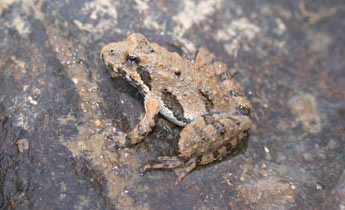
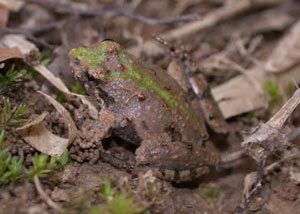
Description: Northern cricket frogs are small, warty frogs measuring 1.6–3.5 cm snout–vent length (SVL) with relatively long hind limbs and no toe pads. Dorsal coloration is variable, gray, brown, or green, often with a brown to orange mid-dorsal stripe and a triangular marking between the eyes. Northern (A. crepitans) and Southern (A. gryllus) cricket frogs are very similar in appearance and best distinguished by call or range. Both species have a dark stripe on the thighs: jagged in Northern cricket frogs, straight and bordered by a pale line in Southern cricket frogs.
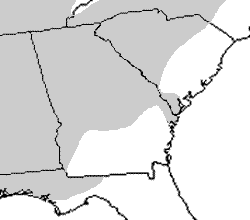
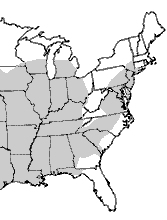
Range and Habitat: Most common in the Southeast Piedmont and Mountain regions, generally replaced by Southern (A. gryllus) cricket frogs in the Coastal Plain. Occupies a variety of moist habitats but is most frequently found along the margins of permanent ponds, lakes, and slow-moving streams. Prefers shallow, open water with abundant vegetation. Not arboreal and seldom climbs.
Habits: The call resembles marbles clicking together, delivered more rapidly than that of a Southern (A. gryllus) cricket frog. Breeding occurs in spring and summer. Both species are insectivorous. Males are territorial during the breeding season and often engage in aggressive interactions, particularly late in the season when mating opportunities decline.
Conservation Status: Northern (A. crepitans) cricket frogs are common throughout the Southeast, though populations are declining in parts of the Midwest.