
Carpenter Frog (Rana [Lithobates] virgatipes)
Carpenter Frog (Lithobates virgatipes)
Carpenter Frog Call
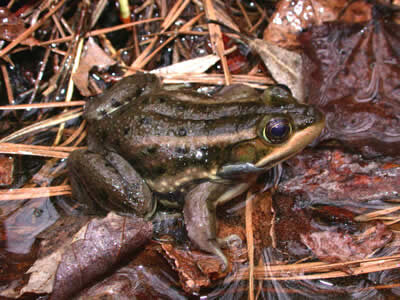
Description: A medium-sized frog (4.1–6.7 cm; 1–2 in) with a brown to bronze dorsum marked by four distinct light stripes running down the back. Lacks dorsolateral ridges. Hind legs are relatively short, giving the species a somewhat toad-like body shape. The venter is whitish with black mottling.
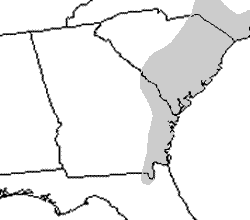
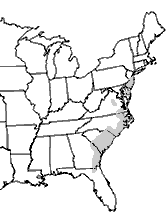
Range and Habitat: From New Jersey south to Georgia, it occurs along the Atlantic Coastal Plain. In the Southeast, it is restricted to the Coastal Plain. It is strongly associated with acidic wetlands such as sphagnum bogs, blackwater swamps, and areas dominated by grasses or sedges.
Habits: A highly aquatic species, seldom found far from water. Breeding occurs in late spring through summer, with males calling from the edges of wetlands. Courtship is unusual: receptive females respond to males with a chirping noise, which can trigger an aggressive, territorial call from nearby males.
Call: A series of sharp notes resembling the rhythmic hammering of a carpenter, giving the species its common name.
Conservation Status: Listed in Georgia as rare or uncommon. Narrow habitat preferences make the species vulnerable to habitat loss, wetland drainage, and environmental degradation.